


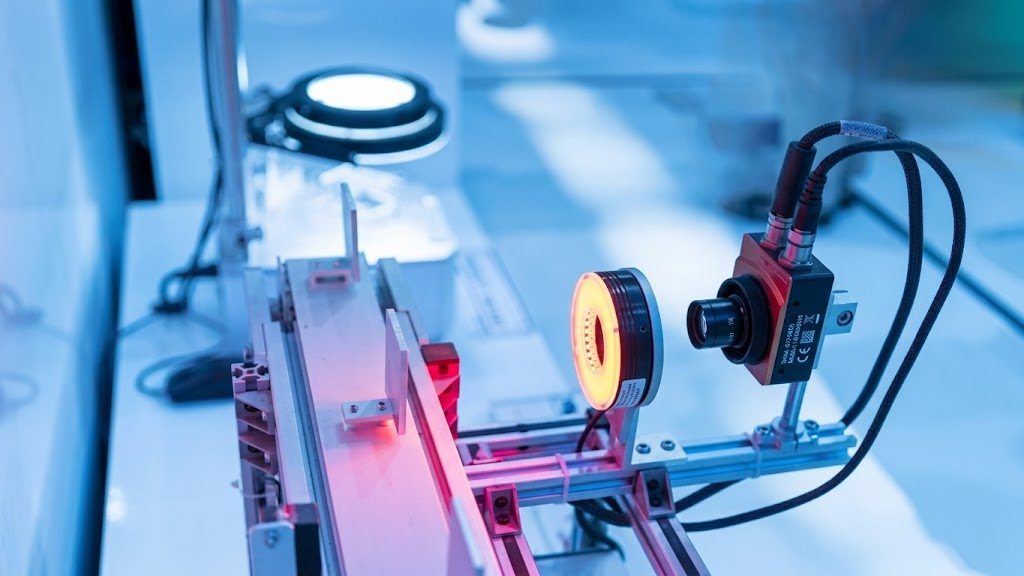
Machine vision inspection systems rely on cameras, lighting, controllers, sensors, and industrial communication equipment to capture and process images accurately. In these systems, stable signal transmission is essential for maintaining image quality and achieving reliable inspection results.
As machine vision inspection equipment often operates alongside motors, servo drives, relays, robots, and other sources of electromagnetic interference (EMI), cable selection becomes an important part of system design.
One key factor affecting signal performance is cable shielding.
Proper shielding can help protect high-speed image and control signals from electromagnetic interference, while poor shielding or improper grounding may lead to communication errors, signal instability, or intermittent system failures.
How Does Cable Shielding Affect Machine Vision Signal Quality?
Machine vision systems depend on stable signal transmission to ensure accurate image processing and reliable inspection performance.
In industrial environments, signal cables may be exposed to electromagnetic interference from motors, servo drives, robots, switching power supplies, and other electrical equipment. This interference can affect the transmission of image data, trigger signals, control signals, and communication signals.
Proper cable shielding helps reduce the impact of external electromagnetic interference and maintain stable signal transmission.
Without appropriate shielding, machine vision systems may experience:
- Image transmission instability
- Data communication errors
- Trigger signal interruption
- Intermittent connection problems
- Reduced inspection accuracy
Therefore, cable shielding is an important factor in maintaining signal integrity and system reliability in machine vision inspection applications.
What Is Cable Shielding?
Cable shielding is a conductive layer surrounding the signal conductors inside a cable.
Common shielding structures include:
- Foil shielding
- Braided shielding
- Foil + braid combination
- Metal shielding layers
The shielding layer helps reduce the influence of external electromagnetic interference on the signal conductors and can also help reduce electromagnetic radiation from the cable itself.
For machine vision applications, shielding becomes particularly important when signal cables are installed close to motors, servo drives, power cables, or other electrical equipment.
How Does EMI Enter Machine Vision Signal Cables?
Electromagnetic interference does not simply affect a cable because it is close to an electrical device. Depending on the surrounding equipment, cable construction, and installation conditions, interference can be coupled into signal cables through different mechanisms.
Common sources of EMI in industrial environments include:
- Servo motors
- Frequency converters
- Switching power supplies
- Industrial robots
- Relays
- High-current power cables
- Welding equipment
When signal cables are routed close to these sources, electromagnetic energy can couple into the conductors through capacitive, inductive, or radiated interference.
The level of interference can also be affected by:
- Distance between signal and power cables
- Parallel cable routing
- Shielding effectiveness
- Shield termination
- Grounding configuration
- Cable construction
For high-speed machine vision communication, maintaining proper signal integrity is particularly important because interference can reduce transmission stability and increase the risk of communication errors.
How Does Cable Shielding Reduce Interference?
A conductive shield creates a protective barrier around the signal conductors.
When properly designed and grounded, the shield can help reduce the amount of unwanted electromagnetic interference reaching the signal conductors.
For industrial machine vision inspection systems, effective shielding usually requires consideration of the entire connection system, including:
- Cable construction
- Connector shielding
- Shield termination
- Grounding method
- Cable routing
- Equipment grounding
Simply adding a shield to the cable does not automatically guarantee good EMI performance. The shielding structure and its connection to the overall system are equally important.
Cable Shielding vs. Connector Shielding
The cable and connector should be considered as one complete signal transmission system.
A well-shielded cable connected to an improperly shielded connector may still create a weak point at the connection interface.
For this reason, machine vision cable assemblies may use:
- Shielded cables
- Metal or shielded connector components
- 360° shield termination
- Proper grounding structures
The connector design should maintain shielding continuity between the cable and the connected equipment.
Why Is Shielding Important for Circular Connectors in Vision Inspection Systems?
Circular connectors are widely used in industrial equipment because of their compact structure, secure locking mechanism, and ability to withstand demanding environments.
In machine vision inspection systems, shielded circular connectors can provide both mechanical connection and electrical signal protection.
Depending on the application, circular connectors such as M8, M12, and other industrial connectors may be used for:
- Sensors
- Camera systems
- Trigger signals
- Industrial Ethernet
- Control signals
- Power connections
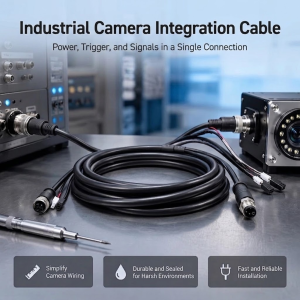
For high-speed communication applications, the connector, cable, and termination method should be selected as a complete system rather than independently.
A properly designed shielded circular connector helps maintain the shielding path between the cable and equipment, reducing potential signal interference points.
Foil Shielding vs. Braided Shielding
Different shielding structures provide different characteristics.
Foil Shielding
Foil shielding provides continuous coverage around the conductors and can offer effective protection against high-frequency interference.
It is commonly used where electromagnetic protection is required while maintaining a relatively compact cable structure.
Braided Shielding
Braided shielding uses a woven conductive layer around the cable.
Its advantages can include:
- Good mechanical strength
- Good flexibility
- Effective EMI protection
- Better suitability for moving applications
Foil + Braid Shielding
A combination of foil and braid can provide broader shielding performance across different frequency ranges while also improving mechanical protection.
The appropriate shielding structure depends on the machine vision interface, cable construction, movement requirements, and surrounding electrical environment.
How Cable Routing Affects Signal Quality
Even a properly shielded cable can experience interference if it is installed incorrectly.
Recommended practices include:
- Keep signal cables away from high-current power cables.
- Avoid running signal and motor cables in parallel for long distances.
- Use appropriate grounding methods.
- Minimize unnecessary cable loops.
- Avoid excessive bending near the connector.
- Select cables suitable for the required movement and environment.
Cable routing and shielding should therefore be considered together during system design.
Shielding Is Especially Important for Moving Vision Inspection Systems
Some machine vision inspection systems are mounted on robotic arms or moving equipment.
In these applications, cable assemblies must withstand repeated movement while maintaining stable electrical performance.
Important considerations include:
- Shielding structure
- Minimum bend radius
- Cable flexibility
- Strain relief design
- Connector locking
- Bending cycle requirements
A cable that provides excellent EMI protection but cannot withstand repeated bending may still lead to premature failure.
For robotic vision inspection equipment, both electrical performance and mechanical durability should therefore be considered when selecting the cable assembly.
How to Improve Signal Reliability in Machine Vision Cable Assemblies
When selecting a cable assembly for machine vision inspection equipment, consider the following:
- Choose the appropriate shielding structure based on the expected EMI environment.
- Use shielded circular connectors when continuous shielding is required.
- Maintain proper shield termination between the cable and connector.
- Use suitable grounding methods according to the equipment design.
- Separate signal and power cables whenever possible.
- Select flexible cables for robotic and moving applications.
- Evaluate the complete cable assembly rather than the cable alone.
A complete approach helps ensure that the cable, connector, shielding, and mechanical structure work together to provide stable performance.
Conclusion
Cable shielding plays an important role in maintaining stable signal transmission in machine vision inspection systems.
In industrial environments where motors, robots, drives, and power equipment generate electromagnetic interference, proper shielding can help reduce signal disruption and improve system reliability.
However, effective EMI protection depends on more than the cable itself. Cable shielding, connector shielding, grounding, termination, cable routing, and mechanical design should work together as part of a complete cable assembly solution.
For machine vision inspection applications using circular connectors, selecting the right combination of cable and connector design is essential for achieving reliable signal transmission and long-term performance.
At Yuanyue Electronics, we provide customized circular connectors and cable assembly solutions for industrial automation, machine vision inspection, robotics, and other demanding applications. Our solutions can be customized according to cable type, shielding requirements, connector configuration, cable length, overmolding structure, and application environment.
1. Why is cable shielding important for machine vision inspection systems?
Cable shielding helps reduce electromagnetic interference that can affect image data, communication signals, and trigger signals, especially in industrial environments with motors and other electrical equipment.
2. Can an unshielded cable affect machine vision signal quality?
Yes. In environments with significant electromagnetic interference, unsuitable or unshielded cables may increase the risk of communication errors, signal instability, and intermittent connection problems.
3. Is cable shielding enough to prevent EMI interference?
Not always. Effective EMI protection also depends on connector shielding, shield termination, grounding, cable routing, and the overall equipment design.
4. Why should circular connectors also have shielding?
If a shielded cable is connected to an unsuitable connector, the shielding path may be interrupted at the connection point. A properly designed shielded circular connector helps maintain shielding continuity through the complete cable assembly.
5. What should I consider when selecting a cable assembly for machine vision inspection?
Consider the communication interface, data transmission requirements, shielding structure, connector type, cable length, flexibility, minimum bend radius, environmental conditions, and whether the cable will be used in a fixed or moving application.
