


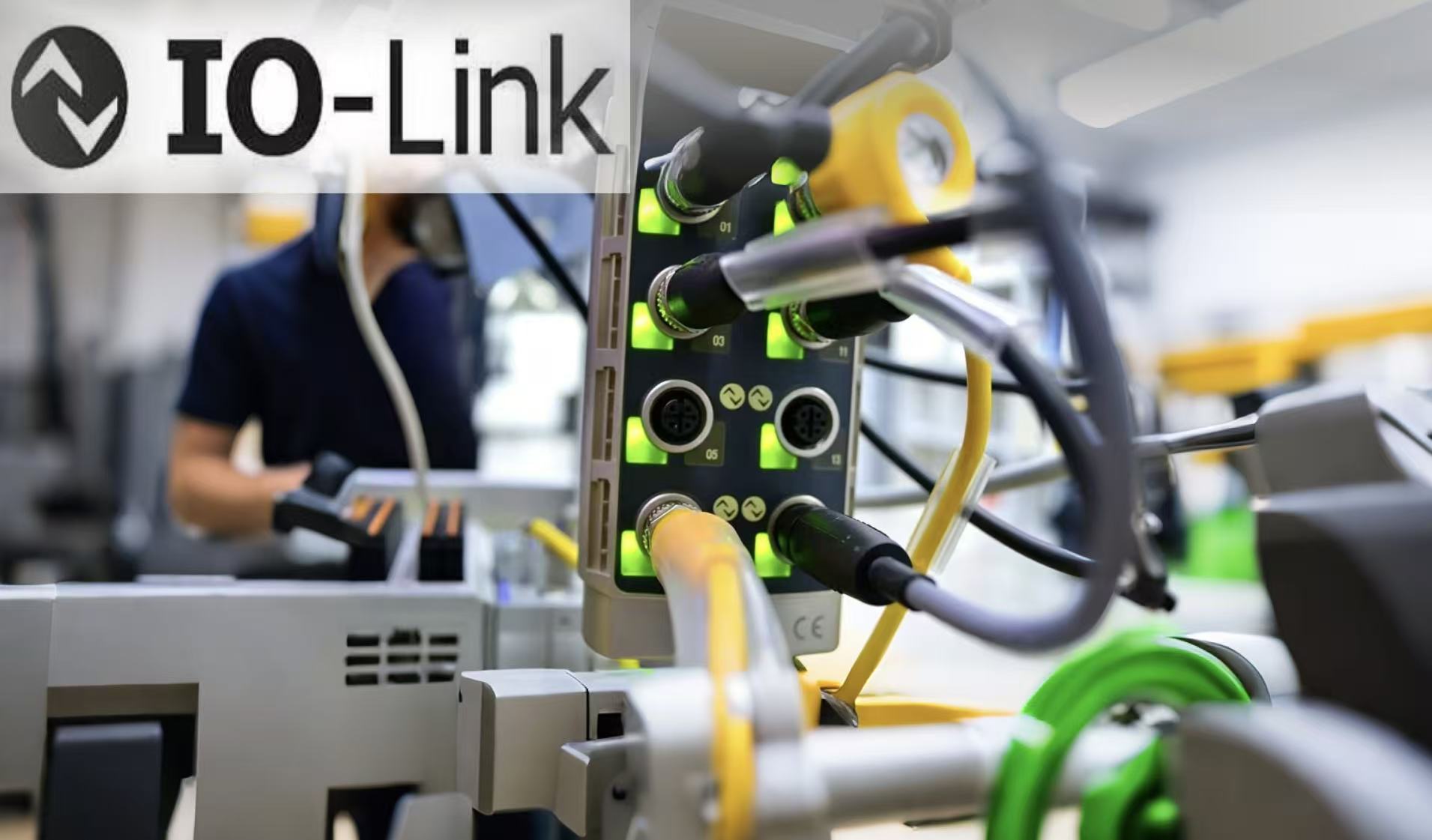
As Industry 4.0 and smart manufacturing continue to evolve, IO-Link has become one of the most widely adopted communication technologies for sensors and actuators. It enables reliable point-to-point communication while simplifying device configuration, diagnostics, and maintenance.
However, the performance of an IO-Link system depends not only on the controller and sensors, but also on the circular connectors that connect them. Choosing the right connector helps ensure stable communication, reliable power transmission, and long service life.
In this article, we’ll explain the key factors to consider when selecting circular connectors for IO-Link applications.
1. Choose the Standard M12 Connector
The M12 circular connector is the most common interface for IO-Link devices. It offers a compact design, secure locking, and excellent resistance to vibration and harsh industrial environments.
Compared with traditional connectors, M12 connectors provide:
- Reliable signal transmission
- Compact installation
- Excellent vibration resistance
- IP67/IP68 waterproof protection
- Easy field installation and maintenance
For most IO-Link sensors and actuators, the M12 connector is the preferred solution.
2. Select the Correct Coding Type
Different IO-Link devices require different connector coding.
The most commonly used options include:
- A-Coded – Standard IO-Link sensors and actuators
- L-Coded – Higher current power applications
- D-Coded – Industrial Ethernet communication
- X-Coded – High-speed Ethernet up to 10 Gbps
For standard IO-Link communication, A-Coded M12 connectors are the most widely used.
3. Select the Appropriate Pin Count
The number of contacts depends on the application.
Typical configurations include:
| Pin Count | Typical Application |
|---|---|
| 3 Pin | Basic power supply |
| 4 Pin | Standard IO-Link sensors |
| 5 Pin | Sensors with additional I/O functions |
| 8 Pin | Multiple signal transmission |
Choosing the correct pin configuration helps avoid unnecessary wiring complexity while meeting the communication requirements.
4. Consider the Protection Rating
Many IO-Link devices operate in demanding industrial environments where they are exposed to dust, water, oil, and cleaning chemicals.
For these applications, select connectors with:
- IP67 for general industrial automation
- IP68 for wet or outdoor environments
- Oil-resistant sealing materials when used near machinery
Higher protection ratings help improve equipment reliability and reduce maintenance costs.
5. Verify Current and Voltage Ratings
Although IO-Link is primarily used for communication, connectors must also supply power to field devices.
Before selecting a connector, verify:
- Rated current
- Rated voltage
- Contact size
- Wire gauge compatibility
Choosing a connector with sufficient electrical capacity helps prevent overheating and voltage loss.
6. Select the Right Cable Material
The connector and cable should be matched to the application environment.
Common cable jacket materials include:
- PVC – Cost-effective for general industrial applications
- PUR – Excellent flexibility, abrasion resistance, and oil resistance
- TPE/TPU – Suitable for harsh environments and continuous flexing
For robotic or drag-chain applications, highly flexible PUR cables are generally recommended.
7. Consider EMI Shielding
In industrial environments with motors, drives, and inverters, electromagnetic interference (EMI) can affect communication stability.
Shielded circular connectors and shielded cables help:
- Reduce electrical noise
- Improve communication reliability
- Protect data integrity
This is especially important when IO-Link devices are installed alongside high-power equipment.
8. Choose a Reliable Connector Manufacturer
Connector quality directly affects the performance of an IO-Link system.
When selecting a supplier, consider:
- Manufacturing experience
- Product consistency
- Quality certifications
- Custom cable assembly capability
- Technical support
A reliable manufacturer can provide both standard products and customized solutions for different industrial applications.
Conclusion
Selecting the right circular connector is essential for achieving stable and reliable IO-Link communication. Factors such as connector type, coding, pin count, protection rating, cable material, and electrical performance should all be carefully evaluated during system design.
For most IO-Link applications, A-Coded M12 circular connectors with IP67 protection provide an ideal balance of reliability, durability, and ease of installation. Choosing high-quality connectors not only improves system performance but also reduces maintenance and downtime over the long term.
At Yuanyue Electronics, we specialize in manufacturing M8, M12, M16, and M23 circular connectors, as well as custom cable assemblies for industrial automation, robotics, sensors, and smart manufacturing applications. With over 18 years of manufacturing experience, we provide OEM and ODM solutions tailored to your project requirements.
1. Which circular connector is commonly used for IO-Link?
The M12 A-Coded connector is the industry standard for most IO-Link sensors and actuators.
2. Is a 4-pin or 5-pin connector better for IO-Link?
A 4-pin connector is sufficient for most standard IO-Link devices, while a 5-pin connector is used when additional I/O functions are required.
3. What IP rating should an IO-Link connector have?
IP67 is the most common choice for industrial automation. For outdoor or wet environments, IP68 may be more suitable.
4. Do IO-Link connectors require shielded cables?
Not always. However, shielded cables are recommended in environments with high electromagnetic interference to ensure stable communication.
5. Can custom circular connectors be used for IO-Link applications?
Yes. Custom cable lengths, overmolding, connector combinations, and cable materials can all be tailored to meet specific IO-Link system requirements while maintaining compatibility with industry standards.
