


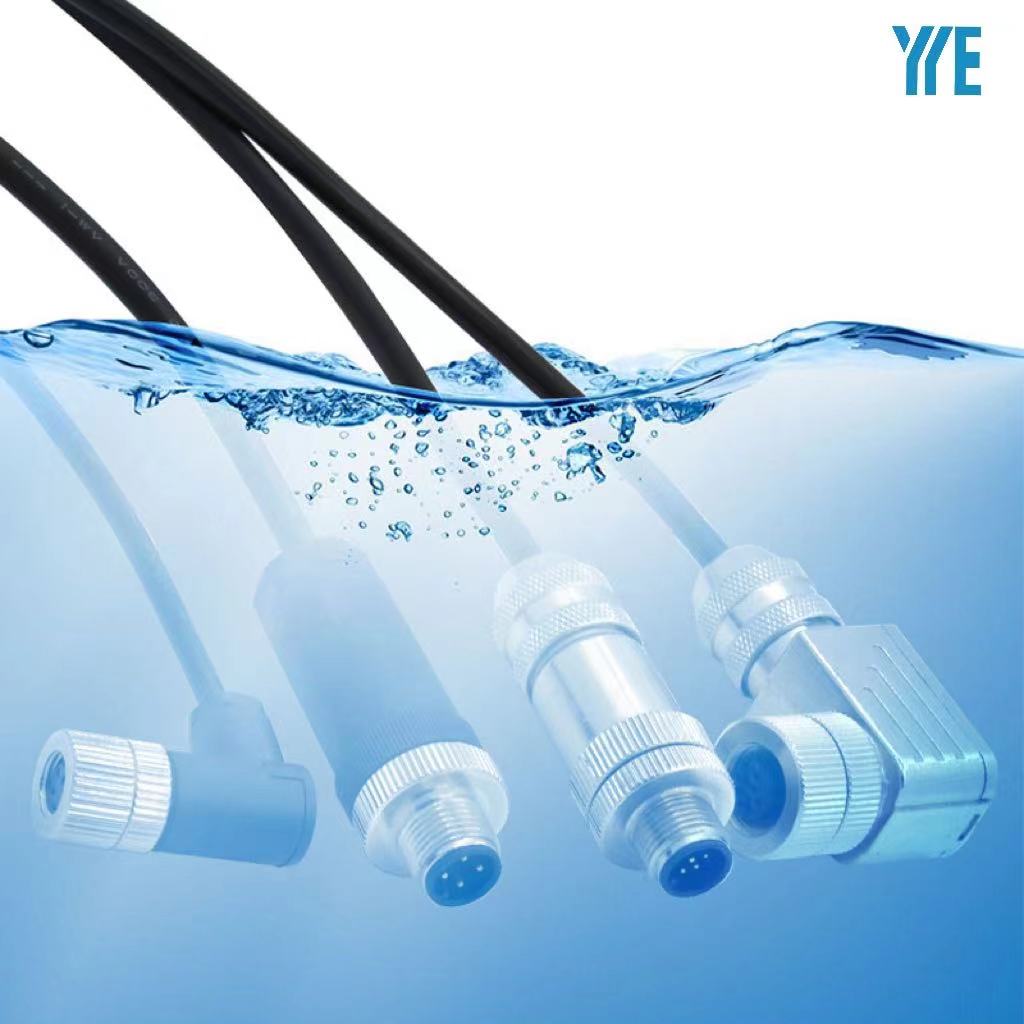
As underwater technologies continue to advance, Remotely Operated Vehicles (ROVs) and Autonomous Underwater Vehicles (AUVs) are playing an increasingly important role in marine research, offshore energy, underwater inspection, aquaculture, and defense applications.
Operating in harsh underwater environments requires every component to deliver exceptional reliability—especially the connectors responsible for transmitting power, signals, and data. This is why circular waterproof connectors have become the preferred choice for underwater robotic systems.
In this article, we’ll explore the key reasons behind their widespread adoption.
1. Excellent Waterproof Sealing
Water ingress is one of the biggest threats to underwater electronic equipment. Even a small leak can cause corrosion, short circuits, or communication failures.
Circular waterproof connectors are designed with multiple sealing features, including:
- O-ring seals
- Rear cable sealing
- Multi-layer waterproof structures
- Threaded coupling for secure sealing
These designs help achieve protection ratings such as IP67 and IP68, ensuring reliable operation in wet and submerged environments.
2. Better Resistance to Underwater Pressure
As diving depth increases, external water pressure rises significantly.
Compared with rectangular connectors, circular connectors distribute mechanical stress more evenly, allowing them to:
- Maintain sealing performance under pressure
- Reduce the risk of housing deformation
- Improve long-term reliability in underwater environments
This makes them ideal for applications ranging from shallow-water inspections to deep-sea exploration.
3. Superior Corrosion Resistance
Marine environments expose connectors to saltwater, humidity, and corrosive chemicals.
To withstand these conditions, high-quality circular waterproof connectors typically feature:
- Stainless steel or nickel-plated metal housings
- Gold-plated contacts
- Corrosion-resistant sealing materials
These materials help prevent oxidation, maintain stable electrical performance, and extend service life.
4. Reliable Performance in High-Vibration Applications
Underwater robots constantly experience vibration and mechanical shock caused by:
- Thruster operation
- Ocean currents
- Equipment movement
- Launch and recovery procedures
Most circular connectors use threaded locking mechanisms, providing:
- Secure mating
- Excellent vibration resistance
- Stable electrical contact
- Reduced risk of accidental disconnection
This ensures uninterrupted operation during demanding underwater missions.
5. Power, Signal, and Data Transmission in One Connector
Modern underwater robots integrate multiple subsystems, including:
- HD cameras
- Sonar systems
- LED lighting
- Navigation sensors
- Depth sensors
- Motors and thrusters
- Communication modules
A single circular connector can support multiple contact configurations, allowing simultaneous transmission of:
- Power
- Control signals
- Sensor data
- Communication signals
This simplifies wiring while improving system reliability.
6. Compact Design for Space-Constrained Systems
ROVs and AUVs are designed with limited internal space.
Circular connectors offer several advantages:
- Compact size
- Flexible panel mounting
- Efficient cable routing
- High contact density
Their space-saving design helps engineers optimize equipment layouts without sacrificing performance.
7. Long Service Life and Low Maintenance
Maintenance and repair of underwater equipment are both costly and time-consuming.
High-quality circular waterproof connectors are designed for:
- Thousands of mating cycles
- Stable contact resistance
- Excellent mechanical durability
- Long-term sealing performance
These features help reduce maintenance frequency and improve overall system reliability.
Key Factors When Selecting Circular Connectors for Underwater Robots
When choosing connectors for marine robotic applications, consider the following specifications:
| Selection Factor | Recommendation |
|---|---|
| Protection Rating | IP67, IP68, or higher depending on the application |
| Housing Material | Stainless steel or nickel-plated metal for corrosion resistance |
| Contact Material | Gold-plated contacts for reliable conductivity |
| Locking Mechanism | Threaded coupling for secure connections |
| Contact Configuration | Select the appropriate pin count for power and signal requirements |
| Current & Voltage Rating | Match the electrical load of the system |
| Cable Type | Waterproof, abrasion-resistant marine cable |
| Operating Temperature | Suitable for the expected environment |
Conclusion
Underwater robots operate in some of the world’s most demanding environments, where connector reliability is critical to overall system performance.
Thanks to their outstanding waterproof sealing, pressure resistance, corrosion protection, vibration resistance, and flexible electrical configurations, circular waterproof connectors have become the industry-standard solution for ROVs, AUVs, underwater cameras, sonar systems, marine sensors, and other subsea equipment.
At Yuanyue Electronics, we specialize in manufacturing circular waterproof connectors and custom cable assemblies for demanding industrial and marine applications. With over 18 years of manufacturing experience, we provide OEM and ODM solutions tailored to your specific requirements. Whether you need a standard connector or a fully customized solution, our engineering team is ready to support your project from prototype to mass production.
1. Why are circular waterproof connectors commonly used in underwater robots?
Circular waterproof connectors provide excellent sealing, corrosion resistance, and mechanical strength. They ensure stable power and signal transmission, even in harsh underwater environments.
2. What IP rating is recommended for underwater robotic applications?
For most underwater robots, IP68 is the preferred protection rating because it supports continuous immersion in water. Deeper underwater applications may require connectors specifically designed for high-pressure environments.
3. Can one circular connector transmit power, signals, and data at the same time?
Yes. Multi-pin circular connectors can integrate power, control signals, and communication data into a single connection, helping reduce cable complexity and improve system reliability.
4. What materials are commonly used in underwater circular connectors?
High-quality underwater connectors typically use stainless steel or nickel-plated metal housings, gold-plated contacts, and durable sealing materials to resist corrosion and ensure long-term performance.
5. How do I choose the right circular waterproof connector for an underwater robot?
Consider factors such as the IP protection rating, operating depth, contact configuration, current and voltage requirements, housing material, locking mechanism, and cable compatibility. Choosing the right connector helps improve reliability and extend the service life of your underwater equipment.
