


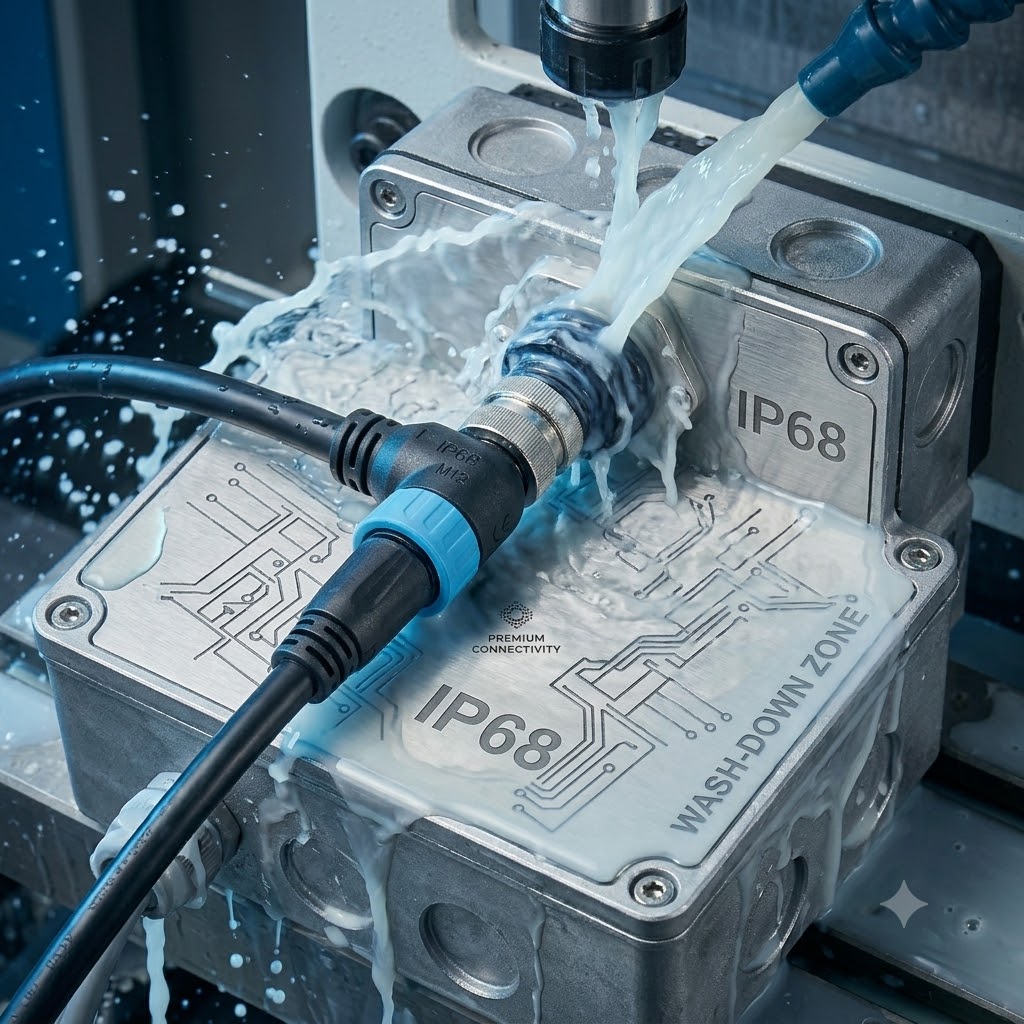
Why Custom Waterproof Wire Harness Assemblies Are More Cost-Effective Than Off-The-Shelf Connectors?
When designing electrical systems intended for harsh environments—such as those found in the automotive industry, industrial automation sectors, battery energy storage systems (BESS), or medical devices—ensuring robust protection against water ingress is crucial. The reliability of these systems can significantly impact performance and safety, making it imperative to prioritize effective sealing solutions.
During the initial stages of prototyping, many engineering and procurement teams choose to purchase off-the-shelf (OTS) connectors and manage the wire assembly and sealing processes internally. At first glance, this approach may appear to be a quicker and more cost-effective alternative. However, a deeper analysis focusing on the Total Cost of Ownership (TCO), long-term reliability, and production yield frequently reveals a range of hidden challenges that can outweigh the initial savings.
In this article, we will delve into the reasons why investing in factory-certified custom waterproof wire harness assemblies is a superior choice. Specifically, we will highlight the advantages of utilizing advanced overmolding technology in these assemblies, demonstrating how this strategy can prove to be far more economical and reliable than the traditional reliance on manual assembly processes conducted on-site. Through this exploration, we aim to clarify the long-term benefits and enhanced performance that factory-engineered solutions bring to the table in demanding environments.
1. The Sealing Showdown: Overmolding vs. Manual On-Site Sealing
The most critical drawback of manual assembly lies in the inconsistent integrity of the waterproof barrier. Although you might opt for a commercially available connector boasting an IP67 or IP68 rating, it’s essential to understand that this designation pertains exclusively to the mating interface of the connector itself. It fails to account for the more susceptible area where the wire penetrates the rear of the connector housing, leaving it vulnerable.
On-site manual assembly frequently relies on techniques such as heat-shrink tubing, mechanical glands, or hand-applied epoxy potting. These methods are heavily dependent on the operator’s expertise and finesse. Challenges can arise from tiny air bubbles trapped within the adhesive, uneven application of heat to the shrink tubing, or minimal flexing of the cable. Over time, these small imperfections can lead to micro-gaps. Such gaps can create pathways for moisture to infiltrate the cable through capillary action, potentially causing internal corrosion and risking system failure.
In stark contrast, factory overmolding utilizes a sophisticated high-pressure injection process that involves the use of molten thermoplastic materials like thermoplastic polyurethane (TPU), polyvinyl chloride (PVC), or silicone. This technique meticulously encases the back of the connector and the cable jacket, creating a robust, single-piece enclosure. The result is a molecular-level bond that ensures complete protection against water ingress, heavy vibrations, and mechanical strain. Overmolding delivers an unparalleled level of reliability and durability, far surpassing what can be achieved through manual assembly methods.
2. The Hidden Cost Trap: Calculating the True TCO
At first glance, a bill of materials (BOM) with loose connectors and bulk cable may seem cheaper than a custom-manufactured harness. However, this comparison overlooks the significant hidden operational costs associated with in-house manufacturing:
1. Labor and Time Costs: Tasks such as stripping wires, crimping terminals, applying sealants, and waiting for adhesives to cure require specialized labor and a considerable amount of floor time.
2. Capital Expenditures (CapEx): To ensure even basic consistency, you need to invest in high-precision stripping machines, automated crimping tools, and curing ovens. These tools also require ongoing maintenance and calibration.
3. Material Waste: Scrap rates from manual setups, trial and error, and damage to components during assembly can add unexpected expenses to your project.
By outsourcing to a dedicated wire harness manufacturer, you can transform multi-step processing risks into a fixed, predictable per-unit cost. You only pay for the finished, functional component.
3. Quality Assurance: 100% Factory Testing vs. On-Site Inspection Gaps
When components are assembled manually on a typical factory floor, the quality assurance process often falls short, relying primarily on quick visual inspections and random sampling for testing. This approach leaves many internal defects undetected—issues such as microscopic tears in wire insulators or subtle voids in sealants can easily slip through the cracks of a cursory check. These hidden flaws can remain unnoticed until the product reaches the end user, ultimately resulting in costly warranty claims, product recalls, and potentially severe damage to the brand’s reputation.
In contrast, a professional wire harness manufacturer adheres to rigorous quality management systems, such as IATF 16949 or ISO 9001, which ensure a higher standard of manufacturing integrity. Custom waterproof assemblies undergo a meticulously crafted quality assurance process that incorporates advanced automated testing protocols before they leave the facility:
– 100% Continuity Testing: This step verifies that every single circuit aligns perfectly with the schematic, ensuring that electrical paths are uninterrupted and fully functional.
– Hi-Pot (High-Potential) Insulation Testing: This crucial test subjects the product to high voltage to identify any potential short circuits or insulation failures before the product is deployed, safeguarding against electrical malfunctions.
– Air-Tightness & IP68 Waterproof Testing: Using specialized pressure-decay or vacuum testing equipment, this examination confirms the integrity of overmolding seals, ensuring the assembly can withstand harsh environmental conditions without compromising performance.
Through this thorough quality assurance process, defect rates—which can often be significantly high in manual assembly—are drastically reduced to achieve stringent Parts Per Million (PPM) standards. This commitment to quality not only minimizes risks but also enhances the reliability and reputation of the product in the marketplace.
4. Supply Chain Optimization: One Part Number vs. Dozens of Component SKUs
Overseeing an in-house assembly line can create significant complications within your supply chain, often leading to unnecessary challenges. To assemble a single waterproof connection, your purchasing team must navigate a web of coordination involving multiple vendors: Connector Vendor A, Cable Manufacturer B, Heat-Shrink Supplier C, and Adhesive Specialist D. Each of these vendors plays a crucial role, and if just one encounters a delay in their lead time or makes even the most minor alteration to their specifications, it can result in a complete standstill for your production line.
Moreover, your warehouse must dedicate valuable space to accommodate and manage a multitude of low-value, high-maintenance stock-keeping units (SKUs), creating additional logistical hurdles. This fragmented approach not only complicates inventory management but also inflates procurement costs.
In contrast, opting for a custom waterproof wire harness can significantly streamline your supply chain into a cohesive, efficient solution. With this approach, you’ll only need to manage a single part number, collaborate with a sole supplier, and handle just one invoice. This simplification leads to a fully completed, “ready-to-use” assembly that is meticulously designed to meet your system’s specific dimensions and endure its environmental conditions. Ultimately, this choice drastically reduces both procurement overhead and risks associated with lead-time delays, allowing for a more reliable and efficient production process.
5. Summary Comparison: Manual Assembly vs. Custom Overmolded Harness
| Feature | Manual In-House Assembly | Custom Overmolded Wire Harness |
| Waterproof Reliability | Variable; highly dependent on operator skill. | Permanent, absolute, seamless bonding. |
| Mechanical Strength | Low strain relief; vulnerable to cable pulling. | Excellent; integrated strain relief and bend protection. |
| Upfront Capital Cost | High investment in tooling and testing equipment. | Low development costs are amortized over production. |
| Quality Control | Visual checks or random sampling. | 100% automated electrical, insulation, and sealing tests. |
| Supply Chain Complexity | High (Managing multiple SKUs and vendors). | Extremely Low (Single part number, single vendor). |
6. Frequently Asked Questions (FAQ)
Q1: Custom wire harnesses require tooling. Won’t the upfront mold cost make it too expensive for smaller projects?
A: It’s a common misconception that custom overmolding is only viable for high-volume automotive lines. Utilizing cost-effective, modular tooling strategies works incredibly well for low-to-medium-volume projects. When you factor in the money saved on eliminating manual assembly labor, specialized in-house crimping tools, and high scrap rates, the initial mold cost often pays for itself within the very first production run.
Q2: What is the typical lead time for a custom waterproof wire harness compared to buying off-the-shelf connectors?
A: While off-the-shelf connectors can be shipped quickly, you still have to add the time it takes for your team to cut, strip, crimp, assemble, and cure the sealants in-house, which can take weeks when scaled up. For a custom harness, the initial design and prototyping phase typically takes 1 to 2 weeks. Once the sample is approved, mass production is highly automated, often resulting in shorter, more predictable overall project timelines.
Q3: Can custom overmolding accommodate specific environmental challenges like oil, UV exposure, or extreme temperatures?
A: Absolutely. That is one of the main advantages of customization. When buying off-the-shelf parts, you are stuck with standard materials. With custom engineering, you can select the exact cable jacket material and overmolding compound (such as specialized TPU for oil resistance, UV-stabilized PVC for outdoor solar use, or silicone for medical sterilization) to match your specific application requirements perfectly.
Q4: We already have a specific connector brand specified in our design. Do we have to switch to yours for a custom assembly?
A: Not at all. Complete flexibility is always an option. Custom overmolded wire harnesses can be designed and manufactured using your specified original connectors (e.g., TE, Molex, Amphenol), or you can explore high-quality, cost-effective equivalents to help further optimize your BOM costs.
Conclusion: Partner with the Experts for Long-Term Value
When it comes to developing prototypes, relying on off-the-shelf connectors may offer a seemingly quick and convenient solution. However, as you transition to larger-scale production, continuing with manual assembly can lead to high operational costs and an increased risk of failures in the field. Instead, opting for custom waterproof wire harness assemblies provides numerous advantages, such as enhanced sealing capabilities, reduced long-term expenses, assured quality standards, and a significantly streamlined supply chain.
At Yuanyue Electronics (YYE), we pride ourselves on our expertise in high-precision interconnect solutions tailored to meet your unique needs. Our offerings range from custom overmolded cable assemblies designed for durability and flexibility to our rugged, waterproof M-series circular connectors, built to withstand challenging environments. Our dedicated engineering team is committed to collaborating with you to design and manufacture a wire harness that perfectly aligns with your specific application requirements.
Are you ready to take your project to the next level? Reach out to YYE’s engineering team today to request a complimentary feasibility assessment and receive a customized quotation tailored to your needs. Let us help you optimize your next project with precision and quality.
