
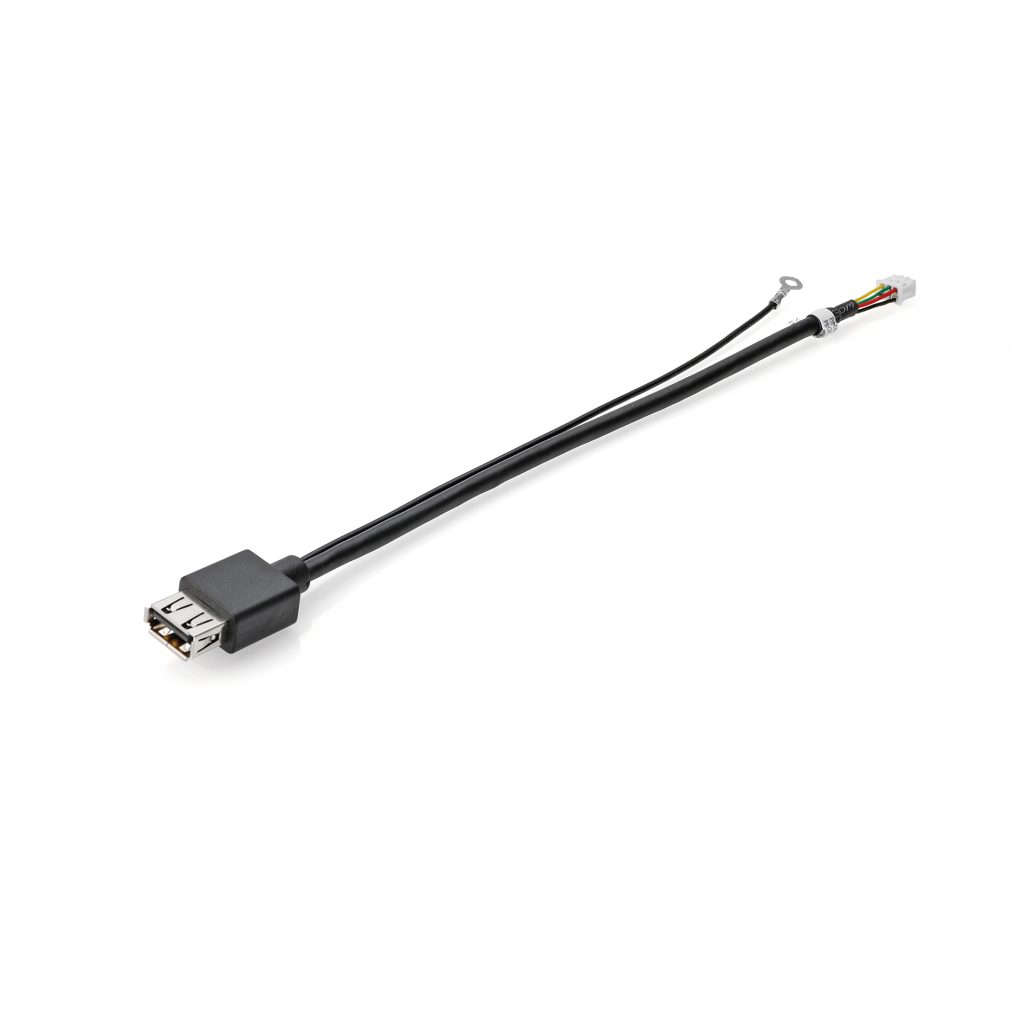
Internal Chassis USB Type-A Female to 4-Pin Housing Header Jumper Wire with Dedicated Ring Terminal Ground Cable for Electronics Cabinet Protection
Internal Chassis USB Type-A Female to 4-Pin Housing Header Jumper Wire with Dedicated Ring Terminal Ground Cable for Electronics Cabinet Protection
Product Specifications
Product Description
This high-precision internal chassis USB female to 4-pin housing wire harness is designed for secure panel data bridging within specialized electronic instrumentation. It is a critical component for industrial automation control cabinets, medical test devices, custom arcade computing platforms, and marine electronic consoles. It converts a basic 4-pin raw PCB header into a robust, standard USB female port mounted on the chassis framework, while adding a specialized independent grounding line.
What Industry Pain Points Does It Solve?
-
Prevents Static Shock (ESD) Destruction: When users plug external thumb drives or mice into an ungrounded metal chassis USB port, static electricity can blast straight through the data pins and fry the expensive processor board. The attached chassis ring terminal ground wire shunts destructive electrostatic spikes safely away into the metal frame housing, shielding the central processor logic from crashing or burning out.
-
Solves Loose Internal Pin Disconnections: Standard loose jumper pins can back off header rows under the strain of heavy equipment vibration. The integrated single-row 4-pin housing block ensures a uniform, tight mechanical snap onto the motherboard layout, completely eliminating individual pin dropouts and preserving system data integrity.
Key Features
- Integrated ESD Grounding: Dedicated ring terminal provides instant chassis earthing to block static shocks.
- Unified 4-Pin Housing Header: Prevents pin misplacement errors on internal PCB layouts during manufacturing.
- Overmolded USB Socket Box: Rigid female socket casing resists deformation when screws or clips are attached.
- High Conductivity Copper: Ensures strong, stable 5V power rails and low-latency USB 2.0 signaling.
