


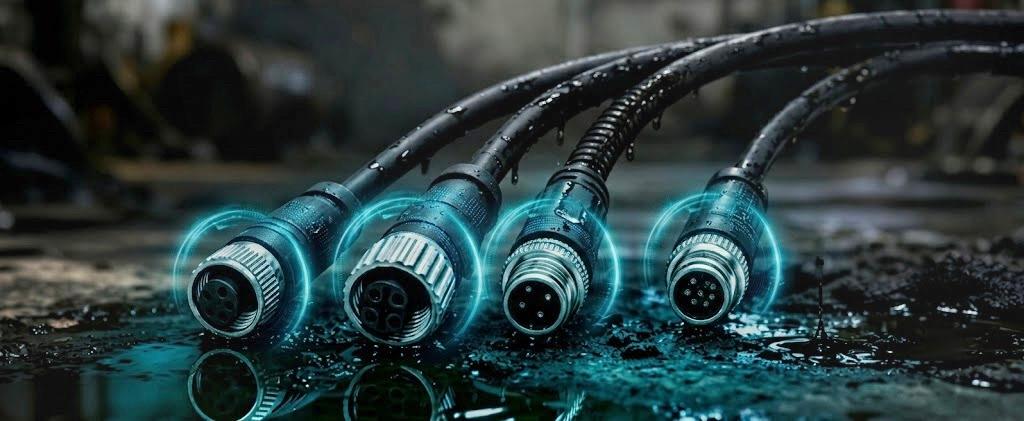
M12 connectors are widely used in industrial automation, robotics, machine tools, food processing equipment, and heavy machinery. These applications often expose connectors to cutting fluids, hydraulic oil, lubricants, and industrial chemicals.
While IP67 or IP68 ratings protect against water and dust ingress, they do not necessarily guarantee resistance to oil exposure. Without proper material selection and sealing design, prolonged contact with oils can shorten the connector service life and affect system reliability.
This article explains why oil resistance is important for M12 connectors, the risks of oil contamination, and the key design features that improve long-term performance.
1. Why Do M12 Connectors Need Oil Resistance?
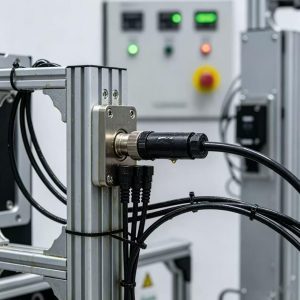
Industrial environments are often filled with various types of oils and lubricants.
Common sources include:
- Hydraulic oil
- Cutting fluids
- Lubricating grease
- Gear oil
- Coolants
- Cleaning chemicals
These substances may come into direct contact with connectors during normal equipment operation.
Unlike occasional water exposure, oil can remain on connector surfaces for extended periods, accelerating material aging if the connector is not designed for chemical resistance.
2. What Problems Can Oil Exposure Cause?
Long-term oil exposure may affect both the mechanical and electrical performance of a connector.
| Potential Issue | Impact on Connector |
|---|---|
| Seal swelling or degradation | Reduced waterproof performance |
| Plastic housing deterioration | Cracking or deformation |
| Cable jacket damage | Reduced flexibility and shorter service life |
| Contact contamination | Increased contact resistance |
| Corrosion | Unstable electrical connections |
These issues can eventually lead to equipment downtime, maintenance costs, and unexpected connector replacement.
3. Key Design Features for Oil-Resistant M12 Connectors
To address oil penetration pathways, a protective system was established based on three aspects:
Oil-Resistant Housing Materials
The housing and sealing components are made from oil-resistant modified PA66 reinforced with 30% glass fiber, replacing standard PA materials. This material offers excellent resistance to industrial oils, with a volume change of ≤2% and hardness retention of ≥90% after prolonged oil exposure (compared to ≥8% volume change for standard PA), ensuring outstanding dimensional stability and durability.
Corrosion-Resistant Contacts
The contacts feature gold plating with passivation treatment, creating an oil-resistant surface that minimizes oil adhesion and allows easy cleaning. Contact resistance variation is kept within ≤3 mΩ, providing more stable electrical performance than conventional tin-plated contacts.
High-Performance Sealing
YYE adopts a dual sealing design to prevent oil ingress.
- Radial sealing: A fluororubber O-ring is integrated at the mating interface. When the threaded coupling is tightened, the O-ring is compressed by 30–50%, forming a reliable circumferential seal.
- Axial sealing: An overmolded oil-resistant PA66 cable seal minimizes the gap between the cable and connector to ≤0.05 mm, effectively preventing oil from penetrating through the cable entry.
This sealing design achieves IP67 protection. Laboratory testing showed no oil ingress and stable contact resistance after 24 hours of immersion in a cutting oil/water mixture.
Optimized Structural Design
- Matte-finished housing: A specially engineered injection-molded surface reduces oil adhesion by up to 70%, making the connector easy to clean with industrial alcohol during routine maintenance.
- Oil-drain thread design: Customized micro drainage grooves in the threaded coupling help prevent the buildup of oil sludge, improving installation and disassembly efficiency in oil-contaminated environments.
4. Typical Applications
Oil-resistant M12 connectors are commonly used in equipment operating under demanding industrial conditions.
| Industry | Typical Equipment |
|---|---|
| Factory Automation | PLCs, Sensors, Industrial Controllers |
| CNC Machine Tools | Machining Centers, Cutting Machines |
| Robotics | Robotic Arms, AGVs, AMRs |
| Heavy Machinery | Construction Equipment, Hydraulic Systems |
| Food Processing | Packaging Machines, Conveyors |
| Automotive Manufacturing | Assembly Lines, Welding Equipment |
5. How to Select an Oil-Resistant M12 Connector
When choosing an M12 connector for oil-exposed environments, consider the following factors:
- Housing materials with good chemical resistance
- Oil-resistant sealing materials
- Appropriate IP protection rating
- Corrosion-resistant contact plating
- Suitable cable jacket materials (such as PUR)
- Compliance with relevant industrial standards
Selecting the right connector can significantly improve equipment reliability and reduce maintenance costs.
Conclusion
Oil resistance is an important consideration when selecting M12 connectors for industrial applications. While waterproof protection is essential, resistance to lubricants, hydraulic fluids, and industrial chemicals is equally critical for long-term reliability.
By choosing connectors with appropriate materials, sealing technology, and corrosion-resistant components, manufacturers can improve equipment uptime, reduce maintenance, and extend service life.
Q1: Are all M12 connectors oil-resistant?
A: No. An IP67 or IP68 rating only indicates protection against water and dust. Oil resistance depends on the connector’s housing materials, sealing components, and cable jacket materials.
Q2: What types of oil commonly affect M12 connectors?
A: Common contaminants include hydraulic oil, cutting fluids, lubricants, gear oil, coolants, and industrial cleaning chemicals.
Q3: Which cable jacket material offers better oil resistance?
A: PUR (Polyurethane) cable jackets generally provide better resistance to oils, abrasion, and chemicals than standard PVC cables, making them ideal for industrial environments.
Q4: Can oil damage the sealing performance of a connector?
A: Yes. Some sealing materials may swell, harden, or degrade after prolonged exposure to oils, reducing the connector’s waterproof performance.
Q5: How can I identify a connector suitable for oil-contaminated environments?
A: Look for connectors that use oil-resistant housing materials, chemical-resistant sealing materials, corrosion-resistant contacts, and PUR cables. Manufacturers should also provide relevant material specifications or environmental test data.
© Yuanyue Electronics — professional circular connector and cable assembly manufacturer
